EYJ Fire Doors
Factory management system for production operations
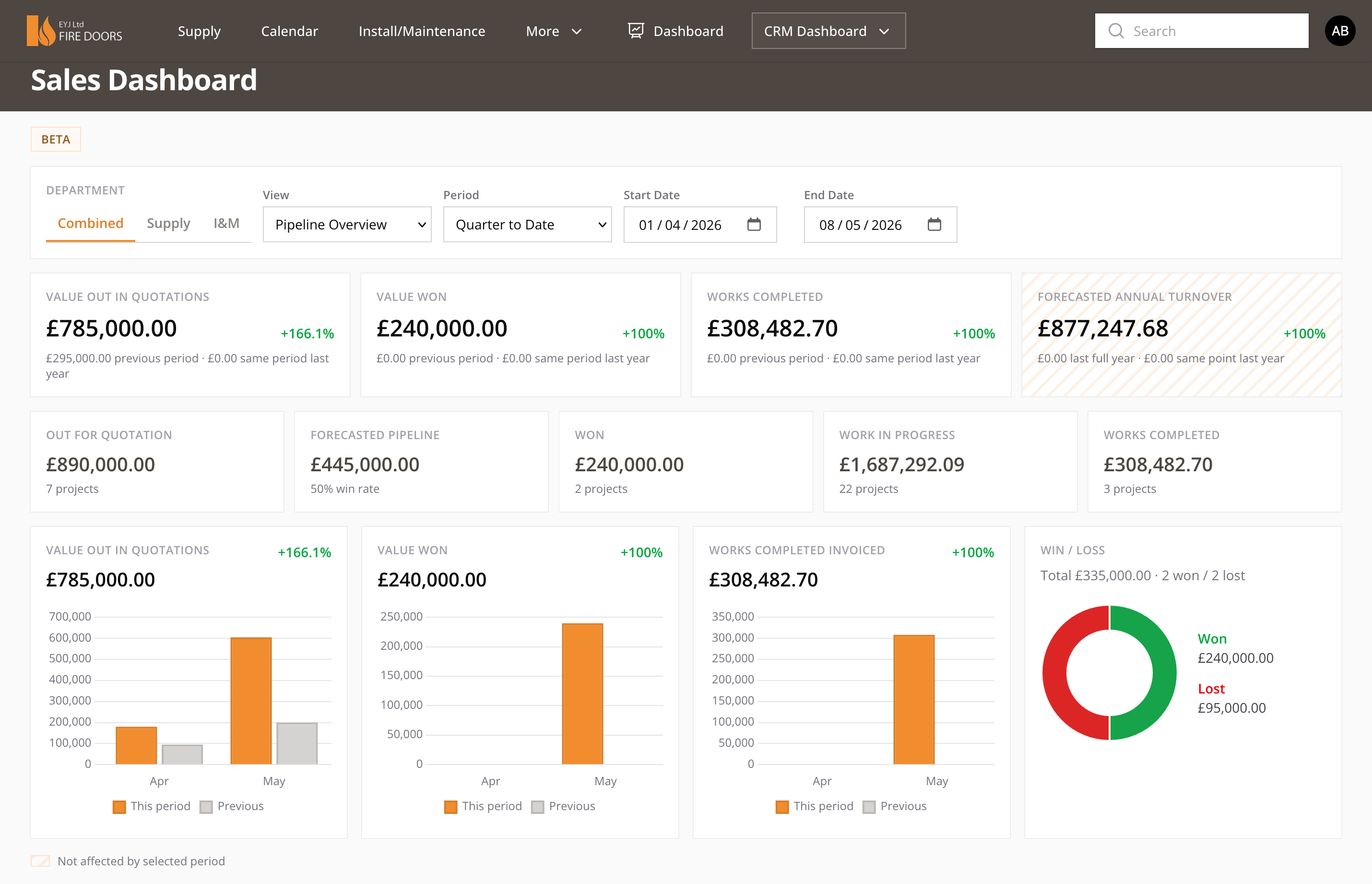
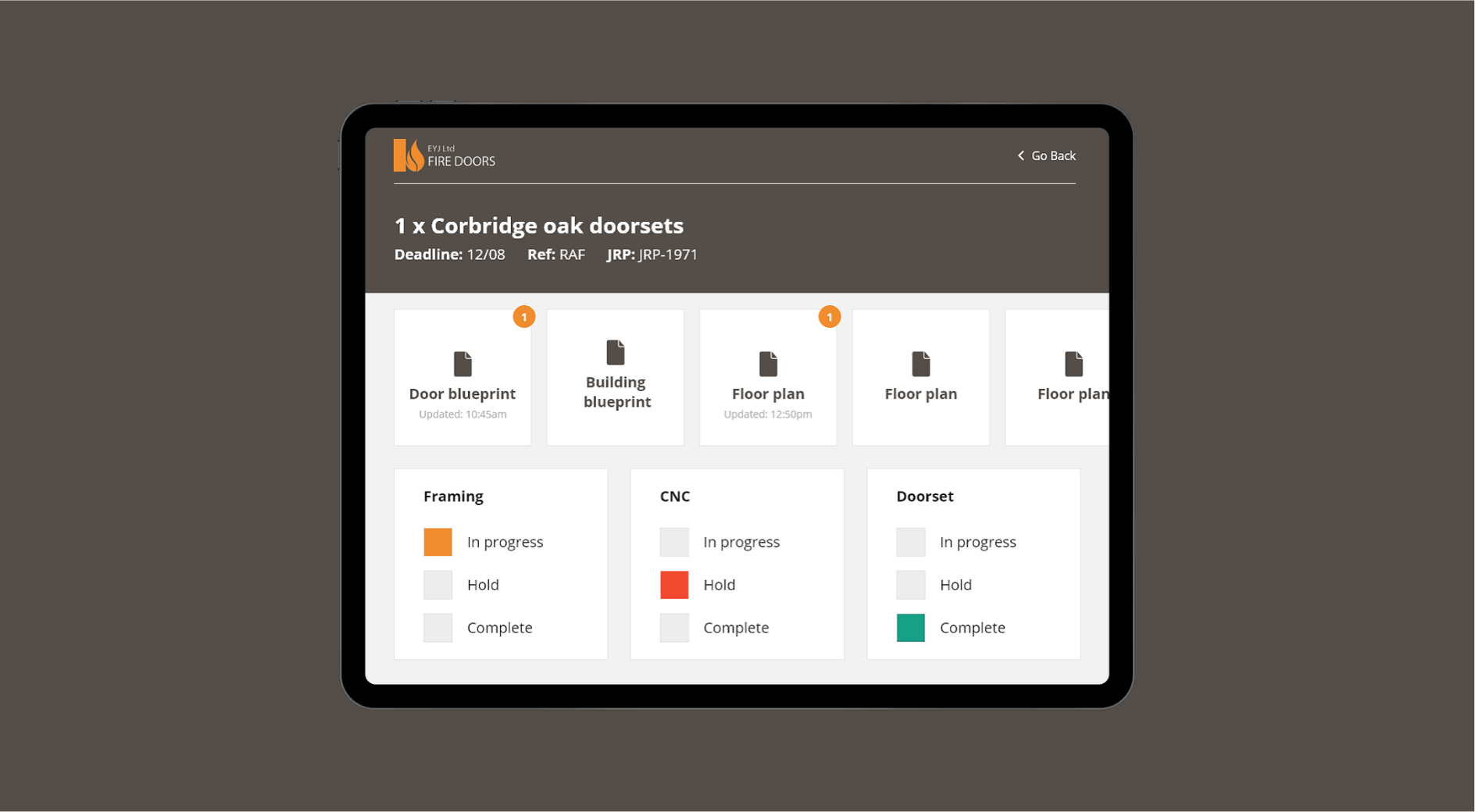
A bespoke platform built around production tracking, commercial workflow, quotation visibility and management reporting inside a live manufacturing business.
Read case study →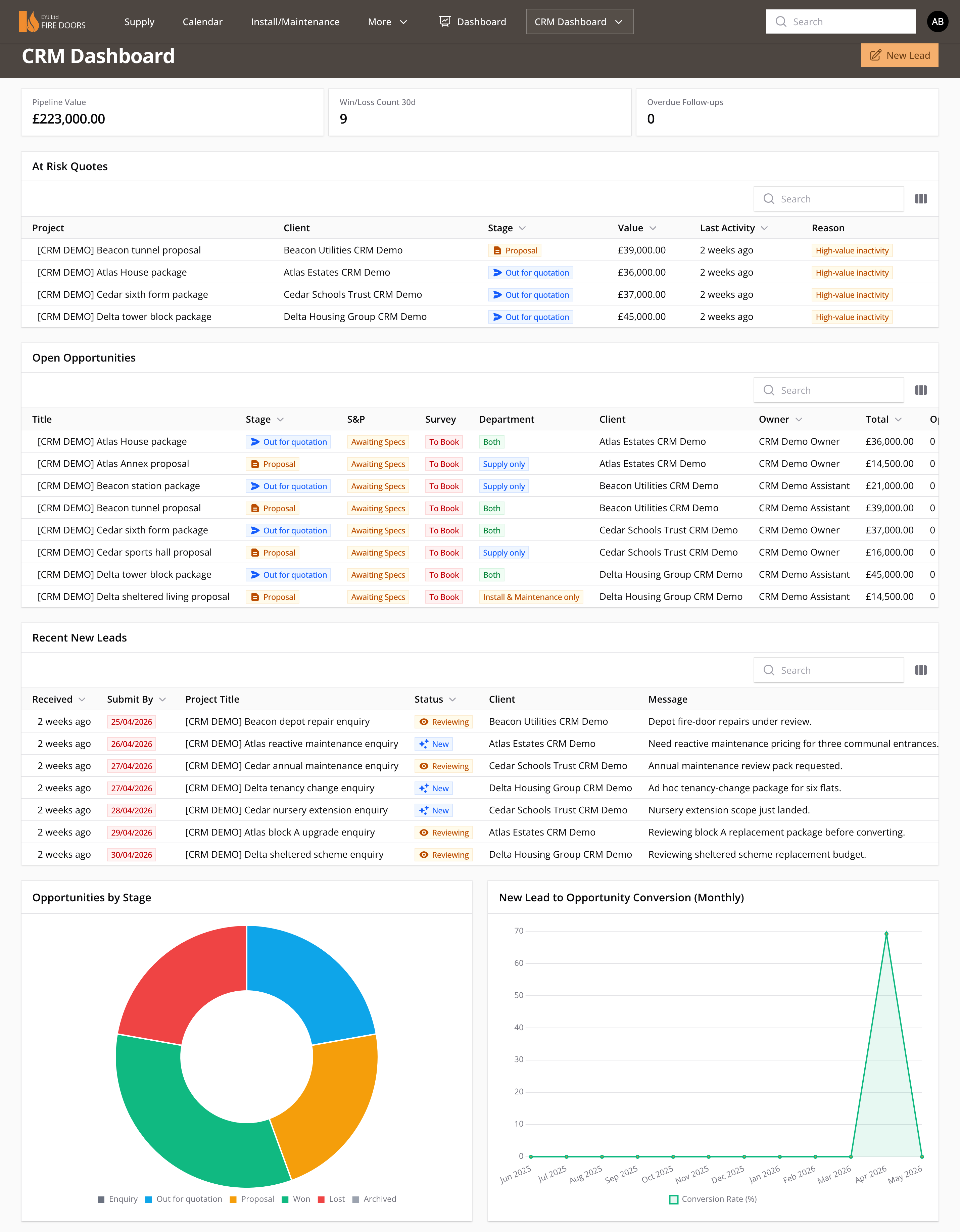

Manufacturing & operational systems
Manufacturing businesses rarely run on one perfect system. Quoting, production, finance, reporting, spreadsheets and internal workflows often evolve separately over time.
We help connect the operational layer around the way the business actually works.
Operational reality
Operational problems rarely arrive as one obvious failure. They build up slowly.
One system manages enquiries. Another handles quoting. Production has its own tracker. Finance has the numbers, but not always the operational context behind them. Someone exports data into a spreadsheet because the report they need is not available in the system they use every day.
Then another spreadsheet appears to bridge the gap between SharePoint, Monday.com, an ERP, a CRM, a finance package, or a production system that was never designed to carry the whole process.
None of this usually happens because people are careless. It happens because the business changes faster than the systems around it. Workflows evolve, reporting expectations increase, and different teams find practical ways to keep work moving.
The cost is visibility. Jobs become harder to track. Updates get copied by hand. Reports depend on the person who knows where everything lives. The business still has the information it needs, but the information is spread across too many places.
Most manufacturing businesses are carrying far more operational complexity than their systems were ever originally designed for.
Relevant operational work
Selected work where software supports real operational activity: factory processes, technical calculations, connected records, reporting, and internal business tools.
EYJ Fire Doors
A bespoke platform built around production tracking, commercial workflow, quotation visibility and management reporting inside a live manufacturing business.
Read case study →
Ellis Patents
A technical product platform and cleat calculator helping customers and engineers work through specification choices without relying on manual support at every stage.
Read case study →Deep Sea Electronics
A mobile operational app connecting handheld scanning, warehouse activity, production queues and back-office records for factory and warehouse teams.
Read case study →Anglo American
Technical tools and interfaces supporting data-led decisions in a complex industrial environment where accuracy and clarity matter.
Read case study →
Unison Ltd
Tools for complex tube-bending calculations and configuration work, helping engineering teams turn technical inputs into useful outputs across devices.
Read case study →Dale Power Solutions
A technically structured website and calculator supporting product understanding, specification conversations and clearer customer decision-making.
Read case study →Cirrus Research
Connected systems around physical measurement devices, including app control, reporting, product guidance and customer-facing operational tools.
Read case study →Connected systems
The issue is usually not that the information does not exist. It is that it sits across systems that were introduced at different points in the business.
SharePoint might hold documents and approvals. Monday.com might track team activity. An ERP might hold stock or production data. Finance systems hold invoices and margins. Internal tools handle the parts that never fitted anywhere else. Spreadsheets sit between them because people still need a practical way to see what is happening.
Replacing everything is rarely the first sensible answer. In many cases, the better work is connecting the workflows properly: reducing duplicated effort, giving people reliable reporting, and making sure production visibility is not dependent on exports, re-keying, or someone remembering to update a master sheet.
That may begin with focused systems integration work, or with modernising an existing system when the software itself has become the risk. Where the public-facing site no longer reflects the organisation either, our manufacturing website design work covers the same technical and commercial context.
Related operational insights
Longer-form thinking on the same problems that tend to sit behind manufacturing systems work: workarounds, reporting pressure, disconnected tools, and operational knowledge living in the wrong places.
Why operational businesses become dependent on spreadsheets, disconnected reporting and manual workarounds, and what usually sits behind the problem.
Quiet credibility
We work with businesses where systems support real operational activity rather than just marketing.
Made in Yorkshire
We’ll be exhibiting at Made in Yorkshire and are always interested in speaking to manufacturing businesses about the systems, reporting processes and operational workflows they rely on day to day.
We will give you a straight answer on how we can help. No pitch. No template proposal.