
When I speak to other business owners about systems, they often assume we have everything perfectly joined up.
One slick platform. Everything talking to everything else. Full visibility across the business at all times.
We did have that.
Loads of them.
And they all cost money.
Monday.com here. GitHub there. Something else for holidays. Something else for support. Another thing for meetings. Another thing for customer records. Finance data somewhere else entirely.
Individually, most of those tools were fine. That was part of the problem. None of them were obviously broken enough to bin, but together they created the usual mess.
Information everywhere, visibility nowhere.
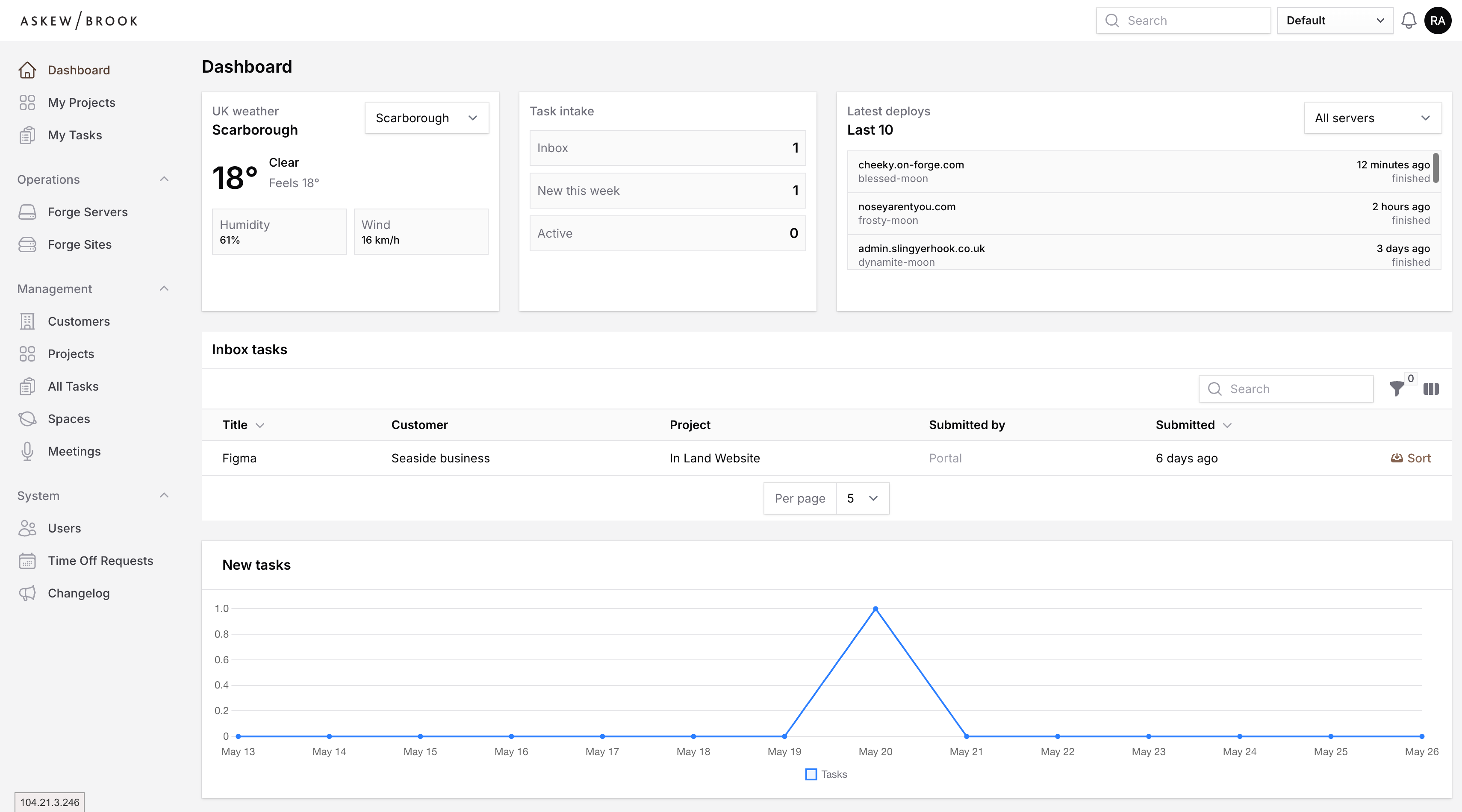
Reporting meant pulling exports from three different places and manually stitching them together. Support allocation lived in one place, project delivery in another, holidays in another, billing visibility somewhere else.
Meetings disappeared into Teams recordings nobody watched. Decisions were remembered by whoever happened to be in the room. One person held half the operating model in their head and everyone quietly hoped they did not leave.
That is not a dramatic technology failure. It is just how businesses end up working when the software stack grows one subscription at a time.
So we built our own operational hub
It started as project and task management because that was the most obvious pain.
Then it grew.
Not because we fancied building another project management tool. The world is not short of those. It grew because the useful information around the work was spread across too many places.
Now it handles projects, tasks, support contract allocation, customer records, deployments, billing visibility, holiday requests, changelogs, operational reporting and meetings.
It is not trying to be a SaaS product. It is not a startup platform. It is not an AI platform, despite the current legal requirement for everyone to pretend everything is.
It is an operational hub. A fairly plain answer to a fairly common problem.
Meetings should leave a useful record
Meetings were one of the biggest annoyances.
You can record everything now, which sounds useful until you remember that nobody has time to rewatch a 48-minute Teams call to find the one decision that mattered.
So our meetings now come into the portal properly. Each one becomes a searchable operational record with a summary, actions, participants and project linkage.
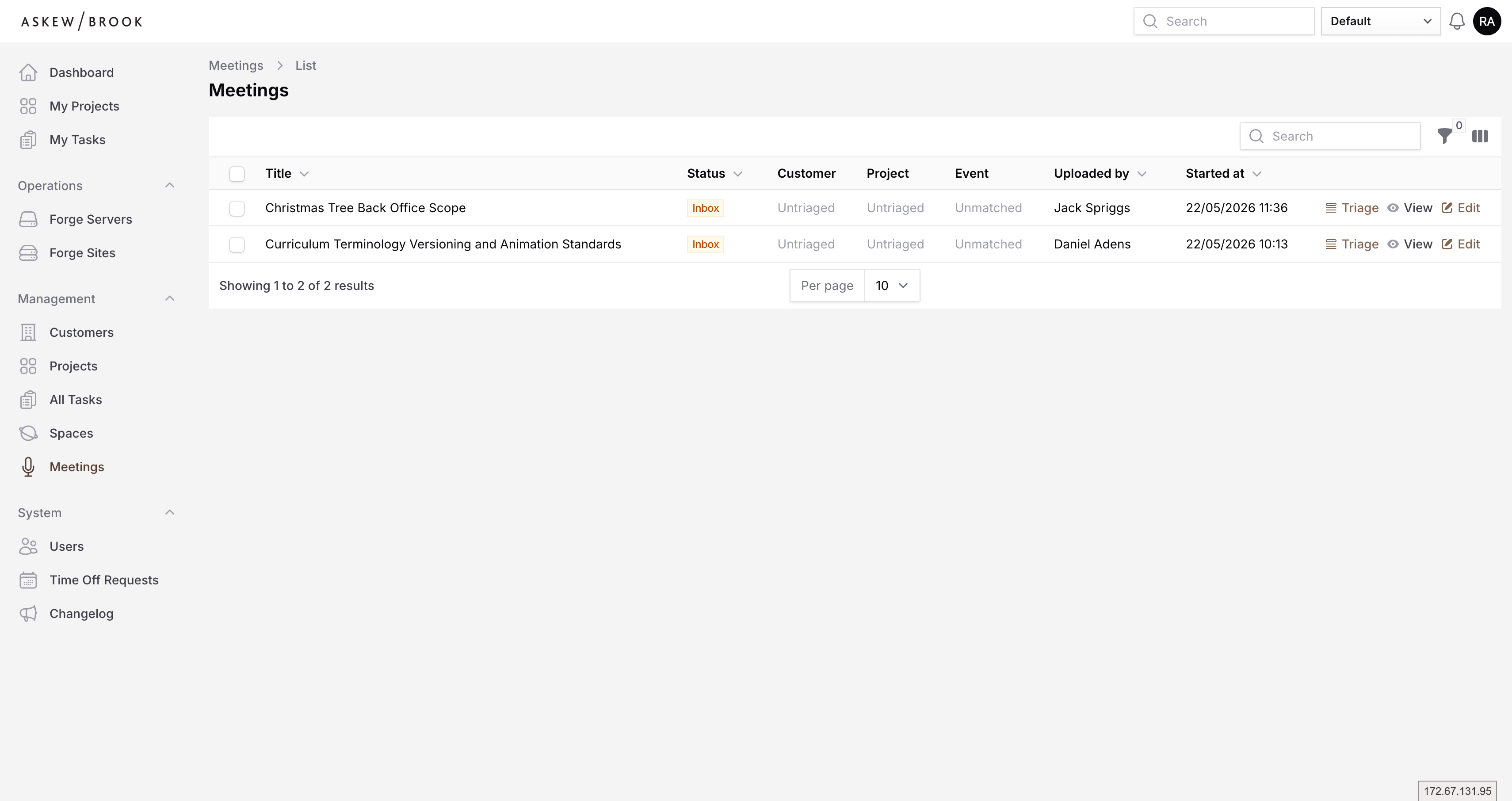
That means decisions are traceable. Actions have somewhere to live. Follow-ups do not depend on someone remembering a sentence from two Tuesdays ago.
It also means meetings sit next to the work they relate to, rather than floating around in calendars, recordings and chat threads.
This is the bit that tends to matter more than people expect. It is not glamorous, but neither is trying to work out why something was agreed three months ago by searching Outlook with increasing levels of resentment.
The value is in joining the boring bits
The useful part is not any one feature.
It is the fact that projects, support allocation, customer records, deployments, billing visibility, holidays, changelogs, meeting notes and reporting all sit close enough together to be useful.
Support time can be seen against contracts. Deployments can be connected to projects. Changelogs are not just developer notes in a corner. Holidays are visible when planning delivery. Customer records are part of the working view, not a separate lookup exercise.
Reporting becomes less about heroic spreadsheet work and more about asking the system what is actually happening.
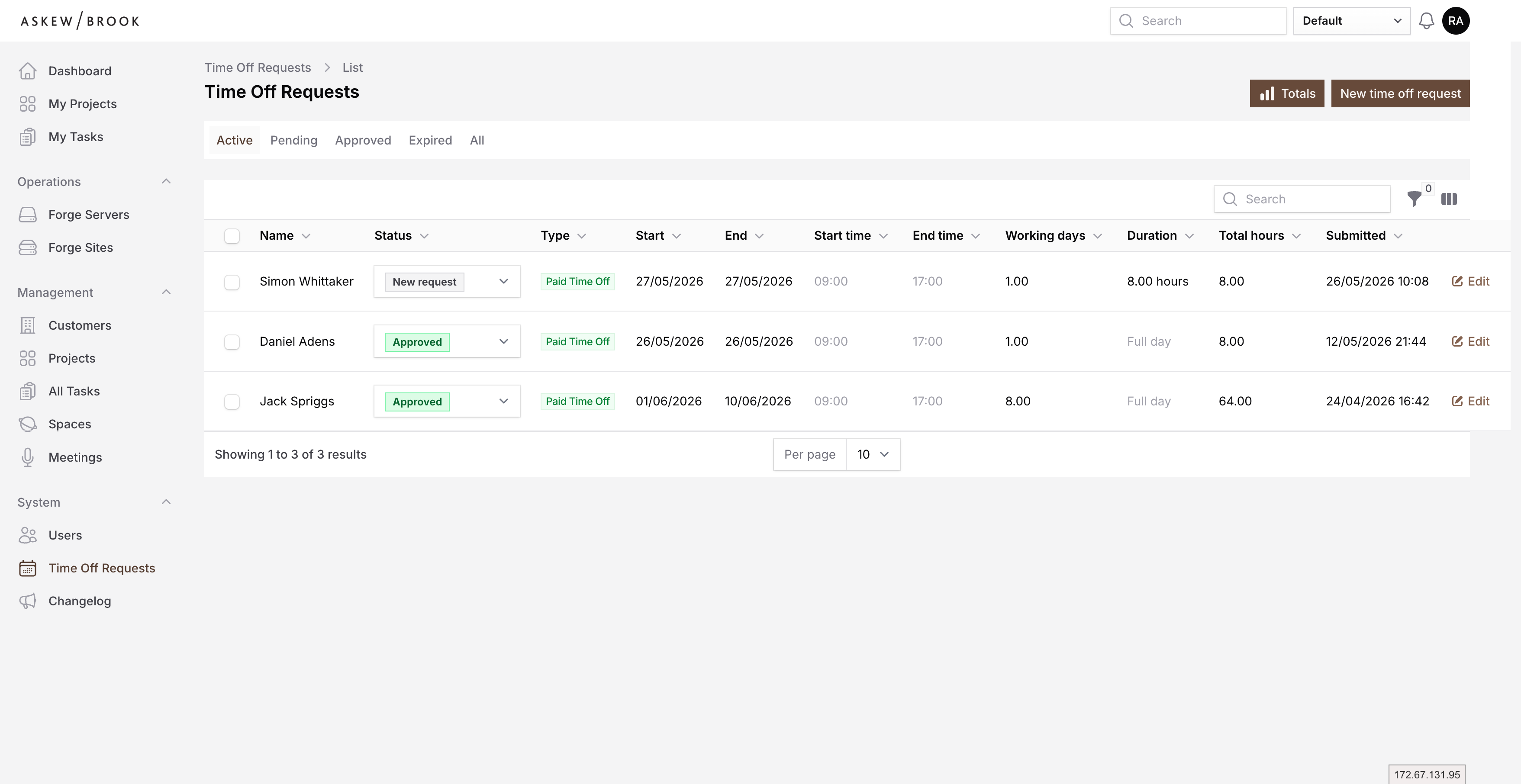
It also costs a lot less than the stack of subscriptions it replaced, which is not a bad side effect.
The bigger point is that the business stops depending quite so much on people remembering where the truth lives.
Why businesses end up needing this
Most businesses do not deliberately create fragmented systems.
They buy what they need at the time. A task tool when projects get busier. A support tool when customers need structure. A holiday system when the spreadsheet becomes irritating. Something for meetings. Something for reports.
All reasonable decisions in isolation.
Then, a few years later, the work is split across five or six places and management visibility depends on manual effort, exports, and someone who knows the unwritten process.
That is usually the point where another generic subscription is not going to fix it.
Sometimes the answer is to replace a system. Sometimes it is to integrate with one. Sometimes it is to build the missing operational layer between them.
For us, building that layer made sense. For other businesses, the shape is different, but the problem is often very familiar.
It does not have to look like ours
The portal is built around how we work, which is exactly the point.
Other businesses need different records, different workflows, different reporting and different views. The useful thing is not cloning our setup. It is building around the way the business actually operates.
And yes, it supports multiple visual themes.
If you want something restrained and sensible, that is available. If you want Barbie pink or full Teletext/Ceefax, apparently we can do that too.
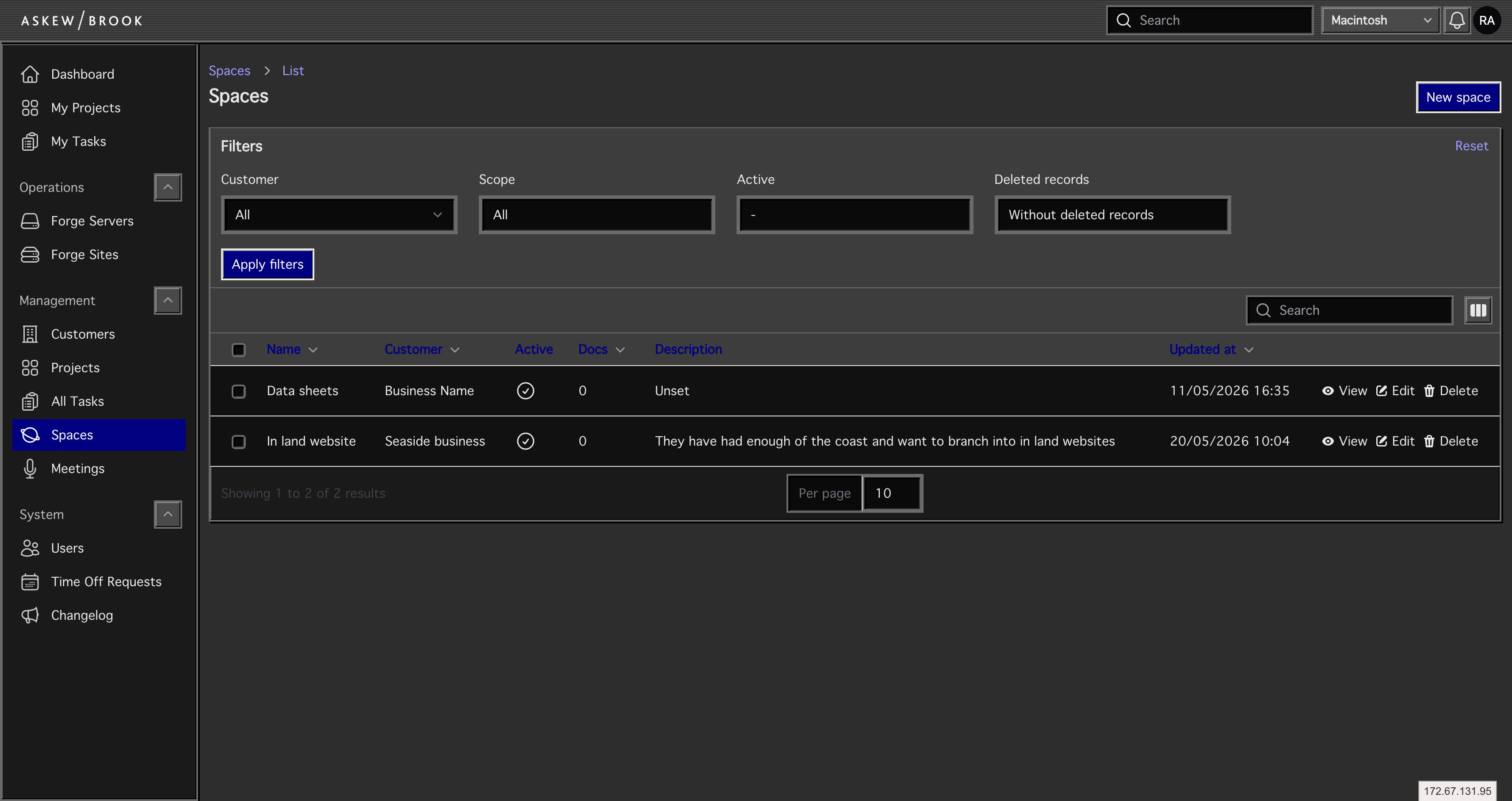
There is probably a serious point in there somewhere about people using systems more willingly when they feel like they belong to the business. But also, sometimes people just enjoy making internal software look slightly ridiculous.
Both are valid.
The short version
We built our operational portal because we had the same problem a lot of businesses have.
Too many systems. Too much manual stitching. Too much knowledge living with individuals. Too little visibility across the actual work.
It now gives us one place for the operational record of the business: projects, support, customers, deployments, billing, holidays, changelogs, meetings and reporting.
We now build and deploy similar hubs for other businesses in the same position.
If this sounds familiar, it is probably worth a conversation.